Use case · Defense and national security
AI agents move fast. Your CUI stays put
A contractor’s personal AI coding agent reportedly ran on a Defense Department system holding controlled unclassified information for two months before anyone noticed. LLMGuard by HACS checks every prompt, file and agent request inside your network, and stops CUI and credentials before they reach an AI service.

- About 2 months
- How long the agent reportedly ran before anyone found itWIRED, October 2026
- 72 hours
- The deadline for reporting a cyber incident on a Defense Department contractDFARS 252.204-7012
The account comes from WIRED, 29 October 2026, citing anonymous sources. The company involved disputes it.
What happened
An AI agent ran for two months, and nobody saw it
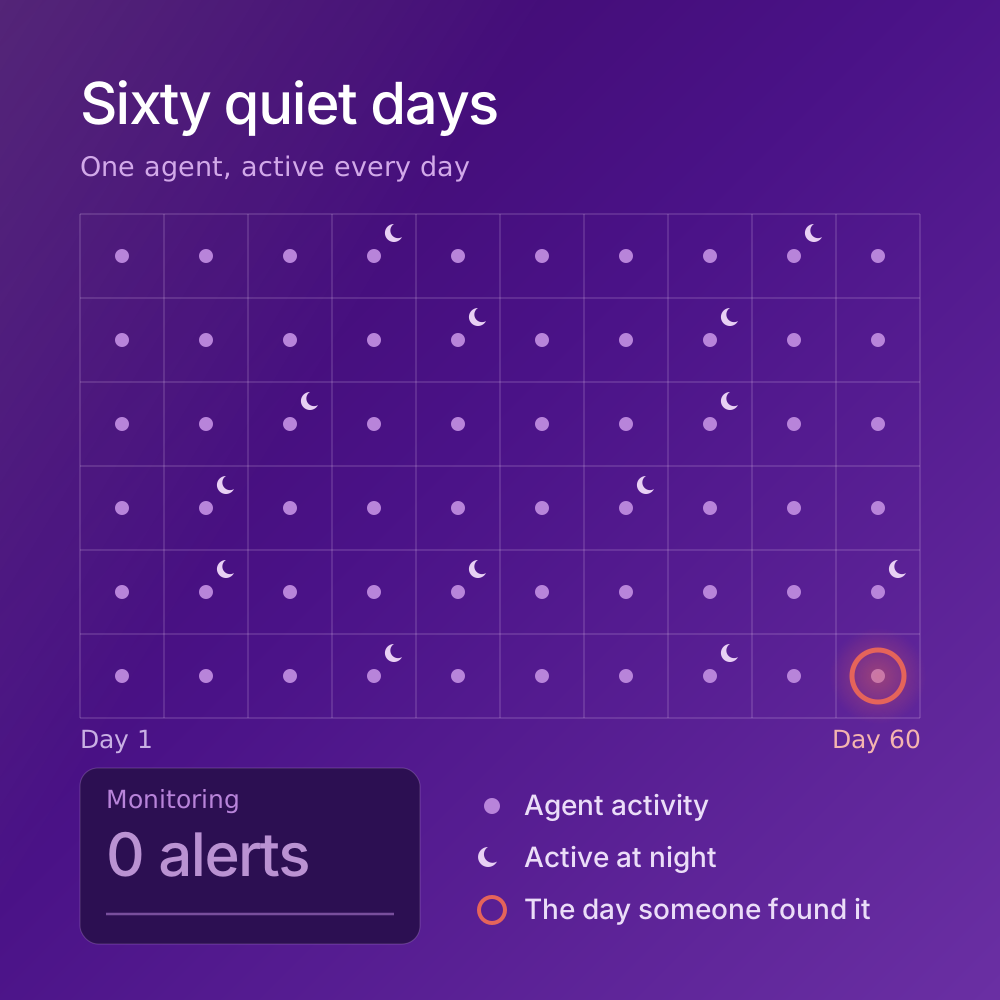
- A personal AI coding account was connected to a secure, multi-agency Defense Department system on NIPRNet.
- The agent was given the contractor’s login, and with it administrative access that went around the normal login controls.
- It reportedly ran for about two months, and appears to have sent credentials, passwords and a network map to an outside website.
It isn’t only contractors. In January 2026, Politico reported that the acting head of the US cyber defense agency had uploaded sensitive contracting documents to the public version of ChatGPT. Security sensors flagged it after the upload.
Finding a leak after the upload is too late. The check has to happen before the data leaves.
With LLMGuard by HACS
What changes when every AI request is checked first
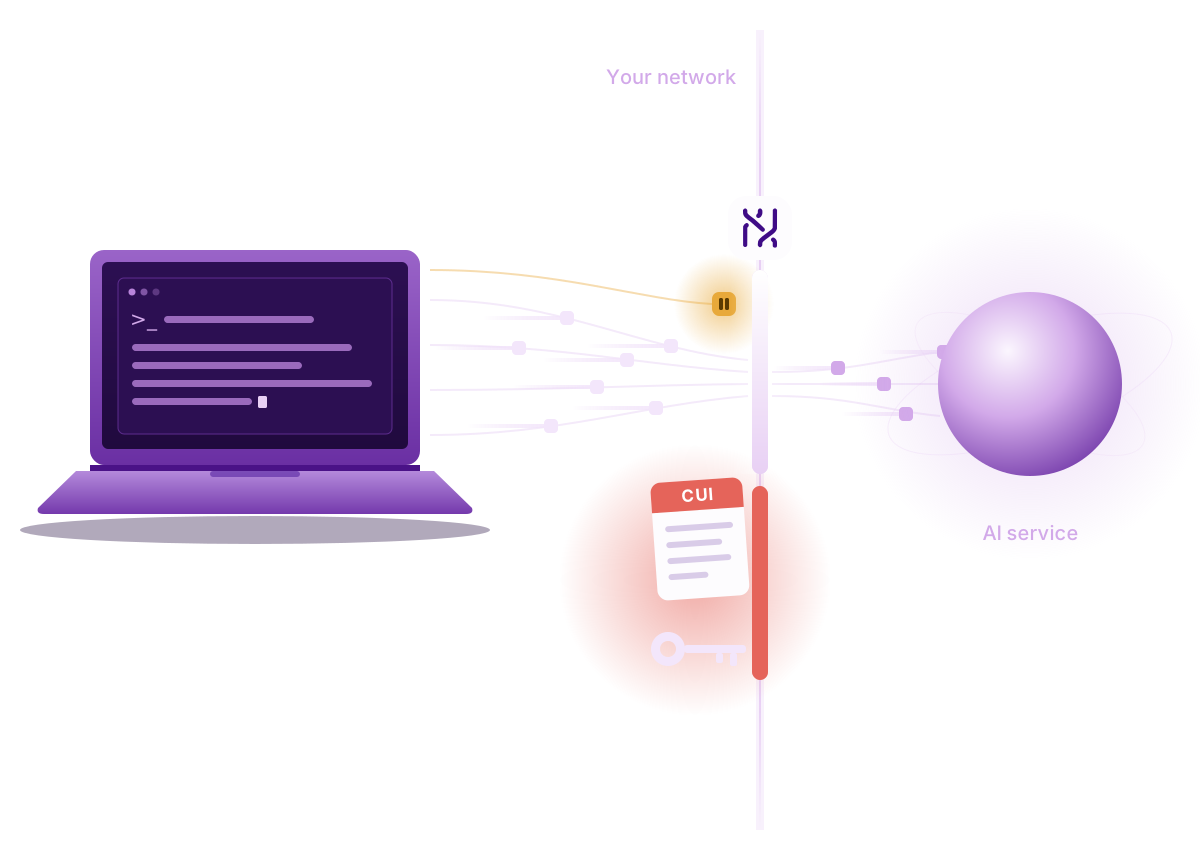
LLMGuard by HACS runs on each managed Windows, macOS or Linux device and on a Policy Engine inside your own network. It checks every request to an AI service before it leaves, whether a person typed it or an agent put it together.
- A personal AI account on a work system
- Every request to an AI service gets the same check, whichever account sends it.
- The agent ran for two months before anyone noticed
- Every AI request shows in your console from the first one: who, which device, which app and what was decided.
- Credentials and network details were within the agent’s reach
- Passwords, keys and internal system details are checked in anything sent to an AI model, including what an agent reads from files and tool output, and stopped before they leave.
- The incident wasn’t reported to the government at first
- Your security team holds a full record inside your network, ready for the 72-hour report.
Built for controlled environments
Inside your network, and on the record
It stays on your network
The Policy Engine and its checks run on your premises. No prompt, file or decision goes to HACS or to any cloud.
It sees what agents really send
Not only typed prompts. Pasted text, attached documents and spreadsheets, screenshots and scans, and everything an AI coding agent sends to its model.
A person decides the grey areas
When a request might contain controlled information, it waits for your reviewer. It is never sent without approval, and the person who sent it sees a plain reason.
The evidence is yours
Every AI request is recorded with the user, device, app and decision. Content is sealed once it is decided, and reading it takes an approved request that is itself logged.
Patterns, not just single events
Optional risk scoring flags people whose AI use is changing, such as repeated blocks, a new AI service, use out of hours or a sudden spike. People appear under pseudonyms, and the feature stays off until your organisation switches it on.
Questions
What defense teams ask first
We already forbid personal AI accounts. Why isn’t that enough?
A policy can’t see a request. LLMGuard by HACS checks the request itself, on the device, whichever account sends it.
Does any of our data leave our network?
No. Checks, decisions and records stay on your premises. Nothing goes to HACS.
Is LLMGuard by HACS a CMMC certification?
No. It helps you show assessors how controlled information is kept out of AI services, with a record of every decision.
Will it slow our teams down?
Allowed requests go through once they’ve been checked. Only the requests that need a decision wait for a reviewer.
Confidential briefing
Bring AI into your programs without bringing CUI out
Tell us about your environment and we’ll arrange a briefing with the people who build and install LLMGuard by HACS.
Sources: WIRED, 29 October 2026, as reported in WIRED’s own post and in CDO Magazine’s summary. Politico, January 2026, as reported by TechCrunch. DFARS 252.204-7012 for the 72-hour reporting rule.